 Add to Chrome
 Add to Firefox
 Add to Edge
AlphaToken: Decoupling Adaptation and Stability for Path-Aware Response Token Valuation in LLM Post-Training
Jun 01, 2026
Token selection is pivotal for effective LLM post-training. However, existing methods mostly rely on local heuristics and rarely formulate token selection as a principled valuation of individual response tokens. We introduce $\textbf{AlphaToken}$, a response token valuation framework that decouples valuation into $\textbf{adaptation}$ (promoting target-task learning) and $\textbf{stability}$ (preserving pre-trained capabilities), and makes each objective $\textbf{path-aware}$ by combining the direct-path signal from local token gradients with the downstream causal-path signal in autoregressive generation. Since retention data are typically unavailable, AlphaToken approximates stability via a $\textbf{Fisher-drift proxy}$ anchored at the pre-trained reference model. For efficient computation, we extend Ghost Dot-Product to token-level valuation. AlphaToken masks low-value response tokens during fine-tuning and preference optimization, concentrating training signals on more valuable positions. Experiments show that AlphaToken improves post-training performance and mitigates catastrophic forgetting.

G-DRAGON: Geospatial Reasoning and Dynamic Planning for Retrieval-Augmented Outdoor Navigation
May 25, 2026Autonomous ground robots operating in large-scale outdoor environments require both robust long-range navigation and fine-grained ''last-mile'' exploration. Current advances in visual-language navigation (VLN) work well at short-range tasks, lacking geospatial grounding for long-distance missions. Some OpenStreetMap (OSM)-based methods relying on cloud-based Large Language Models (LLMs) are prone to factual hallucination and cannot conduct ''last-mile'' exploration based on human instruction. To address these challenges, we present G-DRAGON, a retrieval-augmented framework for outdoor, open-world navigation. This framework maps natural-language commands to versioned, local OSM entities via generative retrieval based on lightweight LLM, yielding accurate coordinates for global route planning. A high-level planning module bridges global topological routes with the SLAM system, projecting geospatial waypoints into the robot's navigable frame. For the ''last mile," the framework transitions to frontier-based exploration and open-set semantic voxel mapping to localize open-vocabulary targets. Experimental results in simulation demonstrate our framework outperforms state-of-the-art baselines. Furthermore, we validate the system in unseen real-world urban environments on an Unmanned Ground Vehicle (UGV), successfully completing person-search missions with trajectories of up to 500m.
OCH3R: Object-Centric Holistic 3D Reconstruction
May 13, 2026Object-centric scene understanding is a fundamental challenge in computer vision. Existing approaches often rely on multi-stage pipelines that first apply pre-trained segmentors to extract individual objects, followed by per-object 3D reconstruction. Such methods are computationally expensive, fragile to segmentation errors, and scale poorly with scene complexity. We introduce OCH3R, a unified framework for Object-Centric Holistic 3D Reconstruction from a single RGB image. OCH3R performs one forward pass to simultaneously predict all object instances with their 6D poses and detailed 3D reconstructions. The key idea is a transformer architecture that predicts per-pixel attributes, including CLIP-based category embeddings, metric depth, normalized object coordinates (NOCS), and a fixed number of 3D Gaussians representing each object. To supervise these Gaussian reconstructions, we transform them into canonical space using the predicted 6D poses and align them with pre-rendered canonical ground truth, avoiding costly per-image Gaussian label generation. On standard indoor benchmarks, OCH3R achieves state-of-the-art performance across monocular depth estimation, open-vocabulary semantic segmentation, and RGB-only category-level 6D pose estimation, while producing high-fidelity, editable per-object reconstructions. Crucially, inference is fully feed-forward and scales independently of the number of objects, offering orders-of-magnitude speedups over conventional multi-stage pipelines in cluttered scenes.
FOCAL-Attention for Heterogeneous Multi-Label Prediction
Apr 21, 2026Heterogeneous graphs have attracted increasing attention for modeling multi-typed entities and relations in complex real-world systems. Multi-label node classification on heterogeneous graphs is challenging due to structural heterogeneity and the need to learn shared representations across multiple labels. Existing methods typically adopt either flexible attention mechanisms or meta-path constrained anchoring, but in heterogeneous multi-label prediction they often suffer from semantic dilution or coverage constraint. Both issues are further amplified under multi-label supervision. We present a theoretical analysis showing that as heterogeneous neighborhoods expand, the attention mass allocated to task-critical (primary) neighborhoods diminishes, and that meta-path constrained aggregation exhibits a dilemma: too few meta-paths intensify coverage constraint, while too many re-introduce dilution. To resolve this coverage-anchoring conflict, we propose FOCAL: Fusion Of Coverage and Anchoring Learning, with two components: coverage-oriented attention (COA) for flexible, unconstrained heterogeneous context aggregation, and anchoring-oriented attention (AOA) that restricts aggregation to meta-path-induced primary semantics. Our theoretical analysis and experimental results further indicates that FOCAL has a better performance than other state-of-the-art methods.
Beyond Paper-to-Paper: Structured Profiling and Rubric Scoring for Paper-Reviewer Matching
Apr 07, 2026As conference submission volumes continue to grow, accurately recommending suitable reviewers has become a challenge. Most existing methods follow a ``Paper-to-Paper'' matching paradigm, implicitly representing a reviewer by their publication history. However, effective reviewer matching requires capturing multi-dimensional expertise, and textual similarity to past papers alone is often insufficient. To address this gap, we propose P2R, a training-free framework that shifts from implicit paper-to-paper matching to explicit profile-based matching. P2R uses general-purpose LLMs to construct structured profiles for both submissions and reviewers, disentangling them into Topics, Methodologies, and Applications. Building on these profiles, P2R adopts a coarse-to-fine pipeline to balance efficiency and depth. It first performs hybrid retrieval that combines semantic and aspect-level signals to form a high-recall candidate pool, and then applies an LLM-based committee to evaluate candidates under strict rubrics, integrating both multi-dimensional expert views and a holistic Area Chair perspective. Experiments on NeurIPS, SIGIR, and SciRepEval show that P2R consistently outperforms state-of-the-art baselines. Ablation studies further verify the necessity of each component. Overall, P2R highlights the value of explicit, structured expertise modeling and offers practical guidance for applying LLMs to reviewer matching.
GSMem: 3D Gaussian Splatting as Persistent Spatial Memory for Zero-Shot Embodied Exploration and Reasoning
Mar 19, 2026Effective embodied exploration requires agents to accumulate and retain spatial knowledge over time. However, existing scene representations, such as discrete scene graphs or static view-based snapshots, lack \textit{post-hoc re-observability}. If an initial observation misses a target, the resulting memory omission is often irrecoverable. To bridge this gap, we propose \textbf{GSMem}, a zero-shot embodied exploration and reasoning framework built upon 3D Gaussian Splatting (3DGS). By explicitly parameterizing continuous geometry and dense appearance, 3DGS serves as a persistent spatial memory that endows the agent with \textit{Spatial Recollection}: the ability to render photorealistic novel views from optimal, previously unoccupied viewpoints. To operationalize this, GSMem employs a retrieval mechanism that simultaneously leverages parallel object-level scene graphs and semantic-level language fields. This complementary design robustly localizes target regions, enabling the agent to ``hallucinate'' optimal views for high-fidelity Vision-Language Model (VLM) reasoning. Furthermore, we introduce a hybrid exploration strategy that combines VLM-driven semantic scoring with a 3DGS-based coverage objective, balancing task-aware exploration with geometric coverage. Extensive experiments on embodied question answering and lifelong navigation demonstrate the robustness and effectiveness of our framework
Distilling Closed-Source LLM's Knowledge for Locally Stable and Economic Biomedical Entity Linking
May 26, 2025Biomedical entity linking aims to map nonstandard entities to standard entities in a knowledge base. Traditional supervised methods perform well but require extensive annotated data to transfer, limiting their usage in low-resource scenarios. Large language models (LLMs), especially closed-source LLMs, can address these but risk stability issues and high economic costs: using these models is restricted by commercial companies and brings significant economic costs when dealing with large amounts of data. To address this, we propose ``RPDR'', a framework combining closed-source LLMs and open-source LLMs for re-ranking candidates retrieved by a retriever fine-tuned with a small amount of data. By prompting a closed-source LLM to generate training data from unannotated data and fine-tuning an open-source LLM for re-ranking, we effectively distill the knowledge to the open-source LLM that can be deployed locally, thus avoiding the stability issues and the problem of high economic costs. We evaluate RPDR on two datasets, including one real-world dataset and one publicly available dataset involving two languages: Chinese and English. RPDR achieves 0.019 Acc@1 improvement and 0.036 Acc@1 improvement on the Aier dataset and the Ask A Patient dataset when the amount of training data is not enough. The results demonstrate the superiority and generalizability of the proposed framework.
Disentangled Multi-span Evolutionary Network against Temporal Knowledge Graph Reasoning
May 20, 2025Temporal Knowledge Graphs (TKGs), as an extension of static Knowledge Graphs (KGs), incorporate the temporal feature to express the transience of knowledge by describing when facts occur. TKG extrapolation aims to infer possible future facts based on known history, which has garnered significant attention in recent years. Some existing methods treat TKG as a sequence of independent subgraphs to model temporal evolution patterns, demonstrating impressive reasoning performance. However, they still have limitations: 1) In modeling subgraph semantic evolution, they usually neglect the internal structural interactions between subgraphs, which are actually crucial for encoding TKGs. 2) They overlook the potential smooth features that do not lead to semantic changes, which should be distinguished from the semantic evolution process. Therefore, we propose a novel Disentangled Multi-span Evolutionary Network (DiMNet) for TKG reasoning. Specifically, we design a multi-span evolution strategy that captures local neighbor features while perceiving historical neighbor semantic information, thus enabling internal interactions between subgraphs during the evolution process. To maximize the capture of semantic change patterns, we design a disentangle component that adaptively separates nodes' active and stable features, used to dynamically control the influence of historical semantics on future evolution. Extensive experiments conducted on four real-world TKG datasets show that DiMNet demonstrates substantial performance in TKG reasoning, and outperforms the state-of-the-art up to 22.7% in MRR.
Comprehend, Divide, and Conquer: Feature Subspace Exploration via Multi-Agent Hierarchical Reinforcement Learning
Apr 24, 2025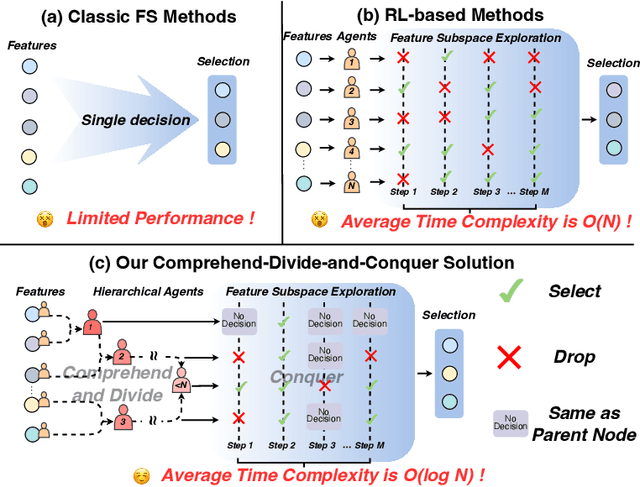
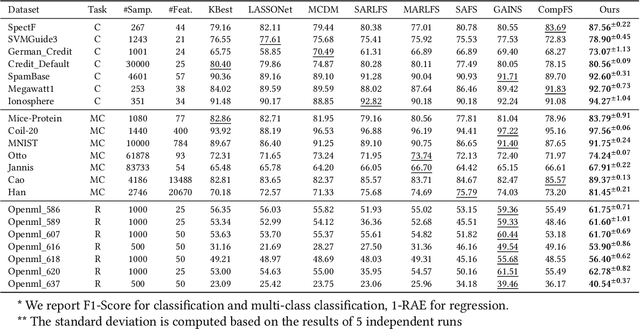
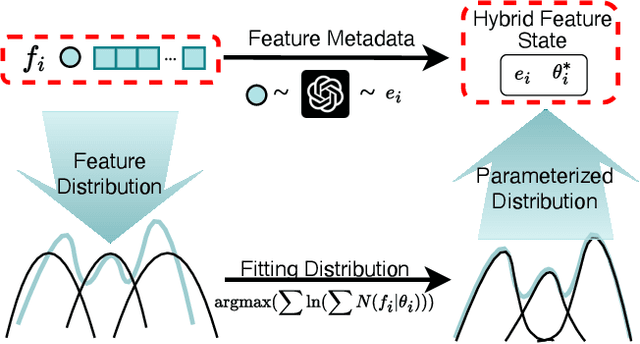
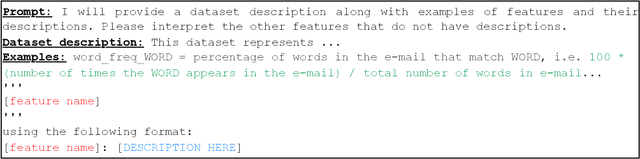
Feature selection aims to preprocess the target dataset, find an optimal and most streamlined feature subset, and enhance the downstream machine learning task. Among filter, wrapper, and embedded-based approaches, the reinforcement learning (RL)-based subspace exploration strategy provides a novel objective optimization-directed perspective and promising performance. Nevertheless, even with improved performance, current reinforcement learning approaches face challenges similar to conventional methods when dealing with complex datasets. These challenges stem from the inefficient paradigm of using one agent per feature and the inherent complexities present in the datasets. This observation motivates us to investigate and address the above issue and propose a novel approach, namely HRLFS. Our methodology initially employs a Large Language Model (LLM)-based hybrid state extractor to capture each feature's mathematical and semantic characteristics. Based on this information, features are clustered, facilitating the construction of hierarchical agents for each cluster and sub-cluster. Extensive experiments demonstrate the efficiency, scalability, and robustness of our approach. Compared to contemporary or the one-feature-one-agent RL-based approaches, HRLFS improves the downstream ML performance with iterative feature subspace exploration while accelerating total run time by reducing the number of agents involved.
Collaborative Multi-Agent Reinforcement Learning for Automated Feature Transformation with Graph-Driven Path Optimization
Apr 24, 2025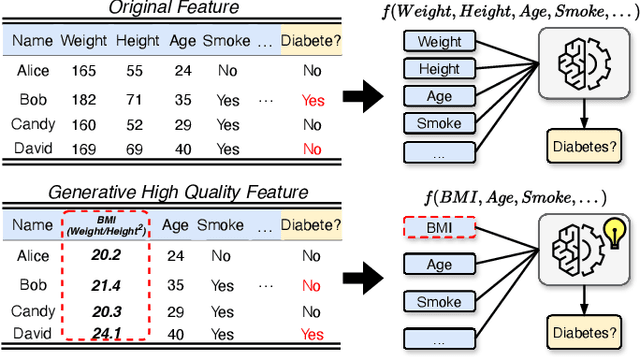
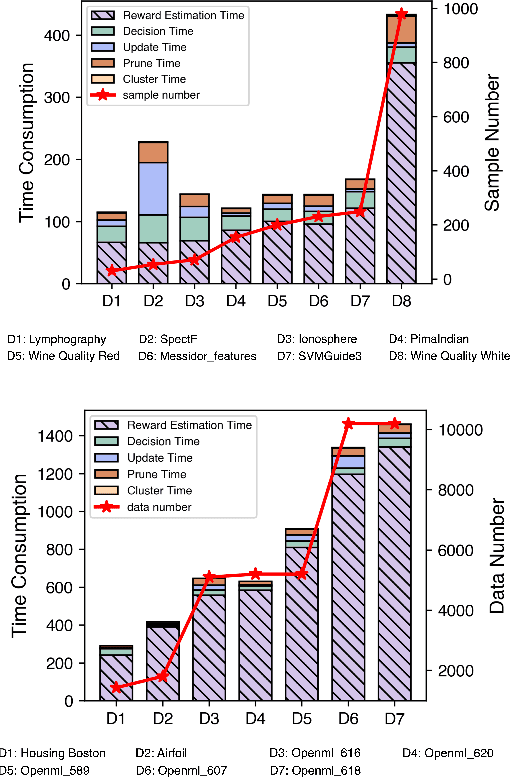
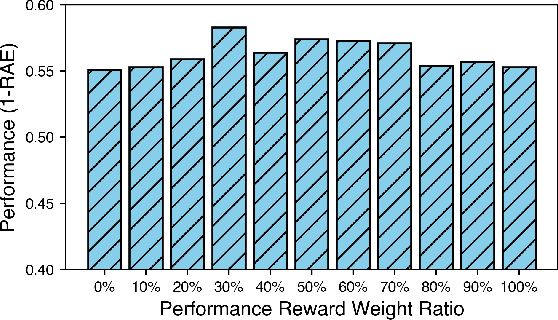
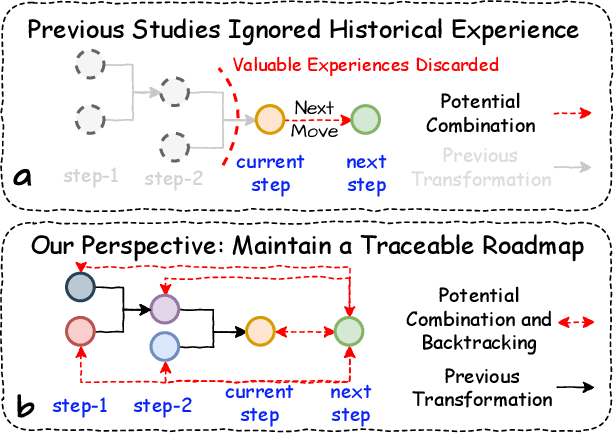
Feature transformation methods aim to find an optimal mathematical feature-feature crossing process that generates high-value features and improves the performance of downstream machine learning tasks. Existing frameworks, though designed to mitigate manual costs, often treat feature transformations as isolated operations, ignoring dynamic dependencies between transformation steps. To address the limitations, we propose TCTO, a collaborative multi-agent reinforcement learning framework that automates feature engineering through graph-driven path optimization. The framework's core innovation lies in an evolving interaction graph that models features as nodes and transformations as edges. Through graph pruning and backtracking, it dynamically eliminates low-impact edges, reduces redundant operations, and enhances exploration stability. This graph also provides full traceability to empower TCTO to reuse high-utility subgraphs from historical transformations. To demonstrate the efficacy and adaptability of our approach, we conduct comprehensive experiments and case studies, which show superior performance across a range of datasets.